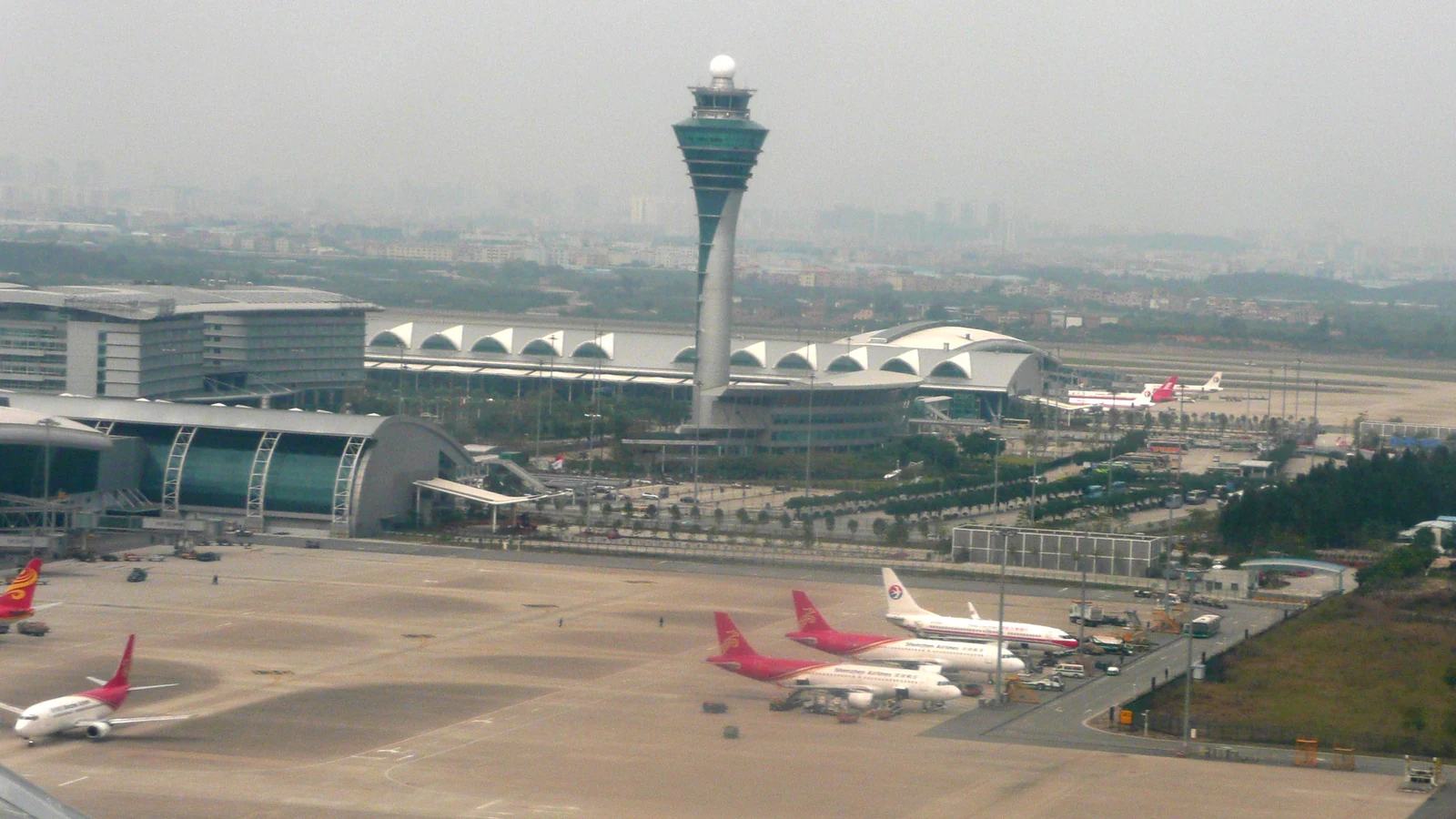
Door-to-door air freight from China means that one chain of providers moves your cargo from the supplier's warehouse to your warehouse in Moscow. A forwarder arranges the carriage, a customs representative clears the goods into Russia, and the airport terminal releases the cargo after customs release. The consignee is responsible for the documents for the goods, permits and product marking. Below are the steps, the roles and the documents.
CargoBooking is an air freight forwarder in Moscow, working since 2019, and an Aeroflot cargo agent since 2019. We carry cargo from China to Moscow through partners. More About CargoBooking. Write to us in English or Russian.
What does "door to door" mean, and who does what?
Door to door is a way to order the shipment. The consignee does not look for a carrier in China, a customs broker and a truck in Moscow separately. The consignee sets one task, and the providers hand the cargo over to each other along the chain. What exactly is included on a given shipment depends on the partner and the cargo, so confirm the scope with our manager.
Who takes part:
- The supplier in China prepares the cargo, the packaging and its own documents: the contract and the packing list.
- The forwarder (the organizer of the carriage) chooses the flight, passes the cargo and documents along the chain, and agrees special cargo with the airline.
- The airline carries the cargo under an air waybill (AWB).
- Terminals. At the departure airport the cargo is handed to the carrier. In Moscow it goes to the temporary storage warehouse of the arrival airport terminal. Below we use Moscow Cargo, the cargo terminal at Sheremetyevo airport, as the example.
- The customs representative (a broker listed in the register kept by the Federal Customs Service of Russia, FCS) files the customs declaration on behalf of the consignee and on its instructions.
- The consignee gives the broker the documents for the goods and the permits, then collects the cargo from the warehouse.
How does the cargo travel from the supplier to Moscow?
- Export from China. The supplier or its agent handles export formalities in China. Details are confirmed when you place the request. Under Chinese customs rules, the declaration can be filed on paper or electronically, but paperless filing has priority. The contract, the packing list, the cargo manifest (the list of all cargo on the flight) and attachments are uploaded to the system. Customs may ask for some documents later, during an inspection.
- The flight. The cargo is delivered to the terminal at the departure airport, and the airline carries it from there. The flight and loading method are confirmed when you place the request. The cargo is either built into one large unit on pallets or in air containers, or carried as separate pieces (loose, or BULK), where each piece is placed in the hold by hand.
- Temporary storage. After arrival, the cargo goes to the temporary storage warehouse of the arrival airport terminal, for example Moscow Cargo at Sheremetyevo. In Russia this warehouse is called SVKh. The FCS defines temporary storage as keeping foreign goods in special places until customs releases them. For air transport, the time limits for customs operations are tied to the airport's cargo-handling schedule.
- Declaration and release. The customs representative files the customs declaration. According to the FCS description, documents can be uploaded in advance to the declarant's electronic document archive (EADD in Russian). The declaration then refers to the archive number, and the documents do not need to be filed again.
- Pickup. The warehouse releases the cargo on the electronic customs release notice that reaches the temporary storage warehouse, as stated on the Moscow Cargo page. Then there are four steps: confirm the cargo status, come to the warehouse, complete the paperwork, collect the cargo.
Time limits set by law and by Moscow Cargo rules:
| Stage | Time limit | Source |
|---|---|---|
| Registration of the customs declaration | no later than 1 hour of customs working time after filing | FCS |
| Release of goods | within 4 hours of registering the declaration | Art. 119 EAEU Customs Code |
| If customs requests documents or orders an inspection | no later than 1 working day after the day of registration; can be extended for an inspection (physical examination, expert analysis) | Art. 119 EAEU Customs Code |
| Temporary storage | 4 months from the day after the documents are registered | Art. 101 EAEU Customs Code |
| Pickup at the gate (Moscow Cargo) | 3 hours from the moment the vehicle is called to the gate; otherwise the cargo goes to paid custody storage | Moscow Cargo |
EAEU is the Eurasian Economic Union, whose common Customs Code applies in Russia. If the declaration is registered less than 4 hours before the end of the customs working day, the release period starts at the beginning of the next working day. The code articles are cited from the ConsultantPlus legal database copy.
Which documents and permits will you need?
The customs representative decides which documents your goods need for the declaration. It usually starts with the contract and the packing list from the supplier. From the carriage side, you need the air waybill.
Proof of conformity. For some products, conformity with EAEU technical regulations must be confirmed: by a certificate or a declaration of conformity in the common format. The list of such products was approved by Customs Union Commission Decision No. 620 of April 7, 2011, and it is updated from time to time. You can check whether a certificate or declaration is valid for your goods in the EAEU common register. In Russia, the Federal Accreditation Service (Rosaccreditation) keeps its own register of declarations. According to Rosaccreditation, a declaration from this register appears in its public part right after it is signed with an electronic signature.
Product marking. Some goods must carry mandatory identification marks. The list is approved by Russian Government Order No. 792-r of April 28, 2018, and it has been extended regularly since then. Check whether your goods are on the list before you order from the supplier.
Documents for the terminal. Moscow Cargo publishes templates on its document templates page: a power of attorney to receive cargo from a company, an instruction letter for payment by a third party, and a power of attorney to manage the payer's funds. There is a separate letter of guarantee for importing medicines.
What is restricted on aircraft?
Electronics from China are often affected by restrictions on lithium batteries, which are dangerous goods. According to the IATA fact sheet (IATA is the International Air Transport Association):
- batteries shipped on their own, without equipment, fly only on cargo aircraft;
- batteries packed with the equipment they power can also fly on passenger aircraft, but with no more than 5 kg of batteries per package;
- batteries shipped on their own must be charged to no more than 30% of rated capacity, and since January 1, 2026 the same rule applies to batteries packed with equipment.
Batteries are either lithium-ion (rechargeable: phones, laptops) or lithium metal (mostly single-use: watches, key fobs). The shipper signs the dangerous goods declaration and is responsible for it. Ask the manager which battery documents your shipment needs when you place the request.
How is legal import different from "gray cargo"?
Russian law has no term "gray cargo." People use it for imports where the goods are declared falsely: the customs value is understated or the wrong commodity code is used. Failure to declare goods or false declaration is an administrative offense under Article 16.2 of the Russian Code of Administrative Offenses. Evading customs payments on a large scale falls under Article 194 of the Russian Criminal Code.
In a legal import, the consignee knows its customs representative, sees what is stated in the declaration, and has the permits and marking the law requires. If you import goods under your own contract, but the chain has no broker and no declaration in your company's name, ask questions before you pay for the shipment.
What to prepare before the request:
- Description of the goods, number of pieces, weight and dimensions, and the city and address of the supplier's warehouse in China.
- The contract and the packing list from the supplier.
- A certificate or declaration of conformity if the goods are on the list, and an answer on whether marking is required.
- For goods with batteries: the battery type (lithium-ion or lithium metal) and whether the batteries are built into equipment.
- For pickup at the terminal: the air waybill number, the payer's INN (Russian taxpayer ID), the vehicle registration number, an identity document, and, if a representative collects the cargo, the original power of attorney to receive cargo.
Send the cargo description to our manager with your request. The manager will confirm the route, the loading method and the door-to-door scope with partners for your shipment. To follow the cargo after departure, see our guide on tracking air cargo in Russia.
For a price for your weight and dimensions, use the online calculator.